/ MOMENTS & MEMORIES
Why We’re Planting 500 Trees (and What It Changes)
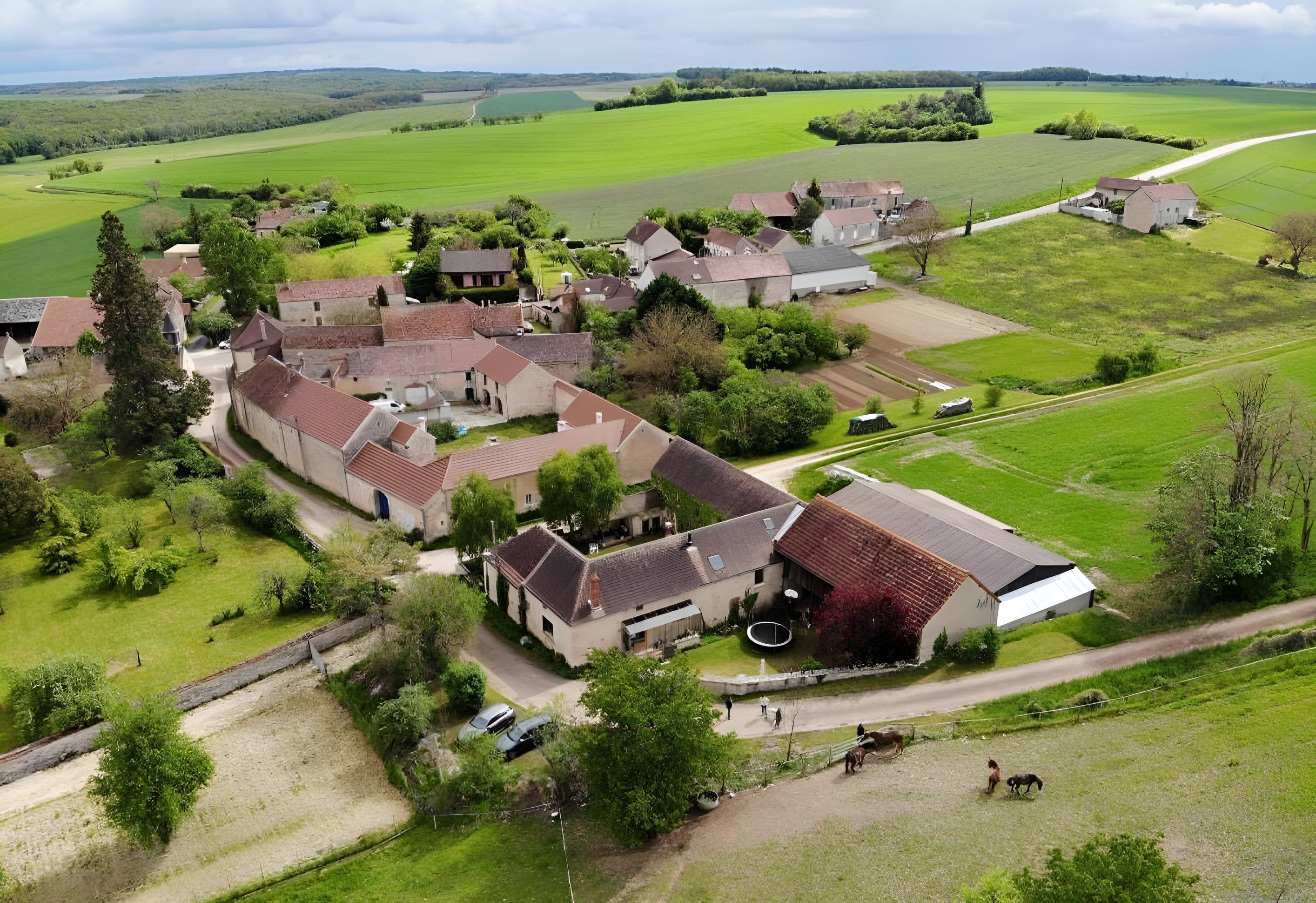
Across the 8 hectares of La Ferme du Cerf Bleu, we’re planting trees, hedgerows, and gardens. Not for the trend, out of necessity. Here’s why, and what it changes.
Why We’re Planting 500 Trees (and What It Changes)
When we arrived here, the landscape around the farm was telling a story that nobody had written but everyone could read.
Vast fields, without hedgerows. Parcels stretching to the horizon without a single tree to break the line. Land worked with impeccable efficiency, and absolute solitude. Not a bush for a bird to land on. Not a grassy margin for an insect to winter in. The soil was productive, but it was alone.
This countryside is the countryside of industrial agriculture. It has its reasons, its history, its economic constraints that we don’t pretend to ignore. But when you live here, when you wake here every morning, when you walk these paths, when you hear the silence of a landscape whose natural inhabitants have disappeared, you can’t pretend not to see.
So we decided to plant.
Not a symbolic tree in front of the house. Not a gesture for appearances.
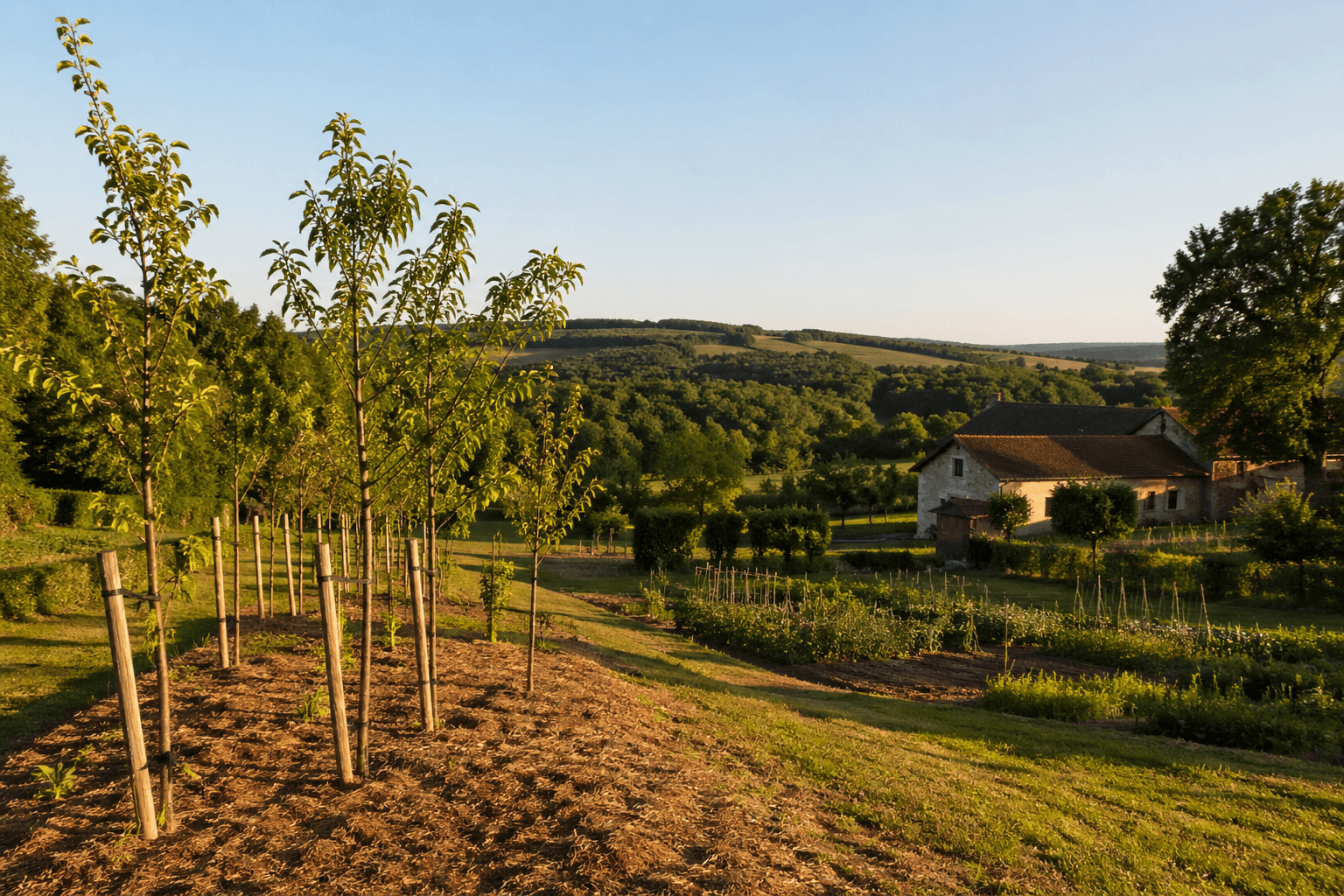
More than 500 trees, shrubs, and native plants. Across 8 hectares. Over several years. With a plan, but also with the patience of knowing that most of what we plant today, we will never see at its full maturity.
Truffle oaks, because this limestone soil was made for them, and because in fifteen years, if all goes well, they’ll produce their first truffles, a quiet treasure that grows in darkness and silence. An orchard of apple, pear, cherry, and plum trees, not for production, but for the pleasure of picking a sun ripened fruit and eating it right there, standing in the grass.
Native hedgerows, because hedgerows are the connective tissue of the landscape, they shelter birds, feed insects, break the wind, hold water, and create living corridors without which the land grows poorer. Every hedgerow we plant is an act of repair.
A spiral of 150 grapevines, 15 different varieties planted in a circle, a gesture that is both poetic and experimental, to see what this land can offer when you give it back its diversity.
A pollinator garden, five octagonal raised beds in a staggered layout, planted to provide continuous bloom from March to November. Lavender, borage, scabious, phacelia, cornflower, thyme, aster, sedum. An open buffet for bees, because bees are the first sign that a place is healthy, or that it no longer is.
And soon, an apiary. Hives set at the garden’s edge, facing south, behind a hedge that will guide the bees’ flight above the heads of those walking below. Honey for our guests, but above all, bees for the landscape, messengers who will tell us whether what we’re doing makes sense.
This isn’t activism. It isn’t a label. It isn’t a communications strategy.
It’s a simple conviction, a place of welcome can also be a place of regeneration. The people who come here are looking for rest, beauty, reconnection. And the land they walk on needs exactly the same things.
Our guests don’t necessarily see all this work. They see a garden, trees, flowers. They hear birds. They smell the lavender in July. But beneath that visible surface, there’s a quiet commitment, a long term wager, an act of faith in a land that has given us everything and to which we’re trying to give something back.
In twenty years, those 500 trees will be tall. The hedgerows will be dense. The orchard will bear fruit. The oaks may, perhaps, have begun to whisper their truffles into the earth. And the farm will be surrounded not by silent fields, but by a living landscape, full of birds, insects, scents, and life.
We may not see all of it. But those who come after us will. And every guest who passes through today, without knowing it, is already walking on the soil of that future forest.