/ MOMENTS & MEMORIES
From New York to Burgundy: How We Left Everything for an Old Farm
Twenty years in the Catskill Mountains, then leaving it all for a crumbling farm in Burgundy. The story of Guillaume and Rose, founders of La Ferme du Cerf Bleu.
From New York to Burgundy: How We Left Everything for an Old Farm
This is not a story of escape.
People who change their lives radically, people who sell, who move, who start again, are often watched with a mixture of admiration and suspicion. Admiration because it’s brave. Suspicion because you wonder, what were they running from?
We weren’t running from anything. We were moving toward something.
For twenty years, we lived in the Catskill Mountains, north of New York. We had built a centre dedicated to reconnection with nature, a place where people came to remember what the modern world had made them forget, that the earth is alive, that silence is nourishing, that slowing down is not failing.
It was a good place. A loved place. A place that mattered to many people. But over the years, another call made itself heard, older, deeper, more personal.
I was born in France. My family is from here, from this rural Burgundy where the walls are thick and the winters long and people don’t speak for the sake of speaking. Rose and I had built a life on the other side of the ocean. But there was this feeling, not a literal voice, more like a pull in the chest, saying, come home. Come back. There’s a piece of land waiting for you.
So we said yes.
The farm we found was nothing like a magazine dream.
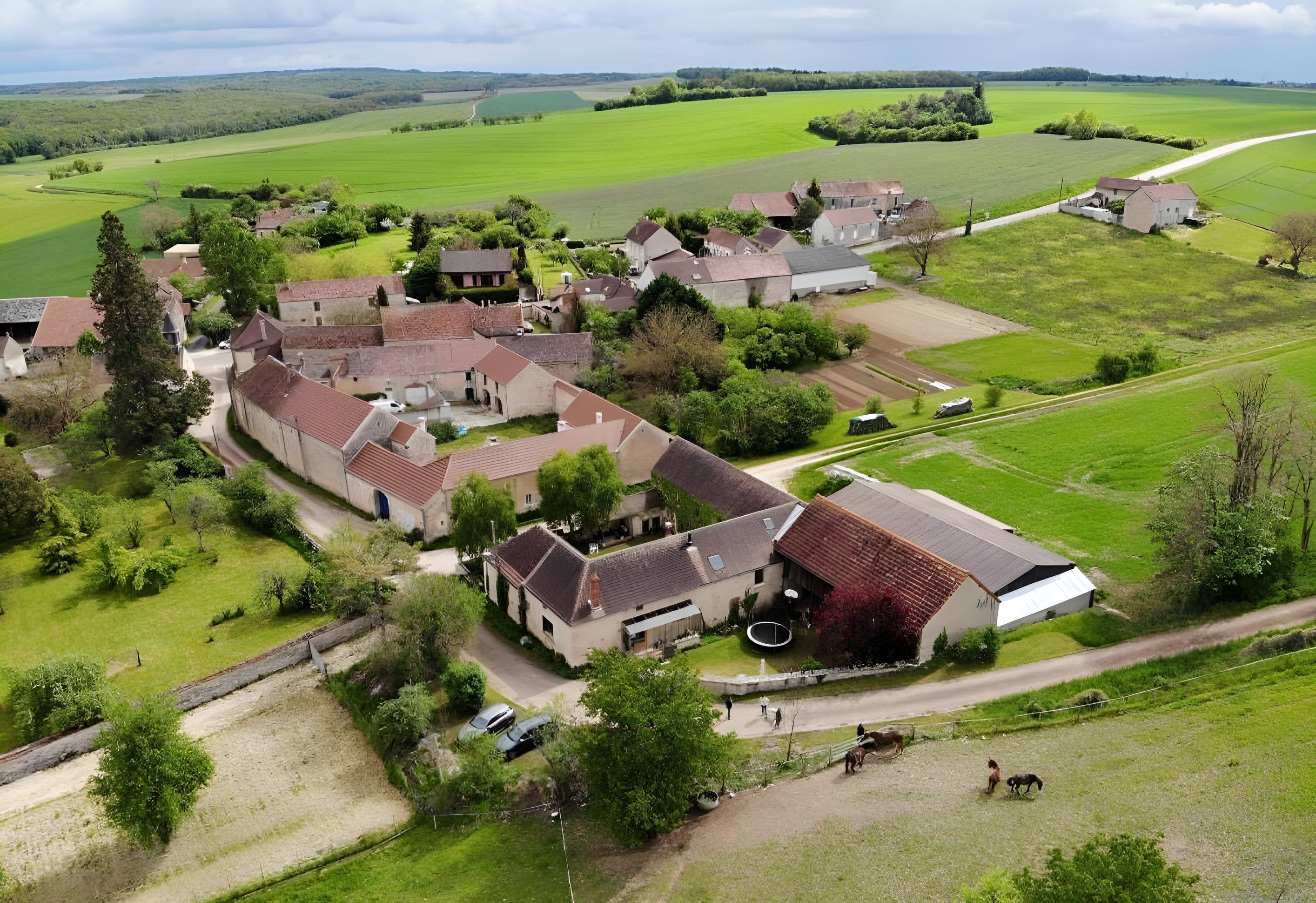
It was an 18th century farmstead, a place that had been a vineyard, then a working farm, then slowly abandoned. The walls still held, but barely. The beams were there, blackened by time. The garden was a bramble thicket. The roof let in the rain in some places and the light in others.
And yet.
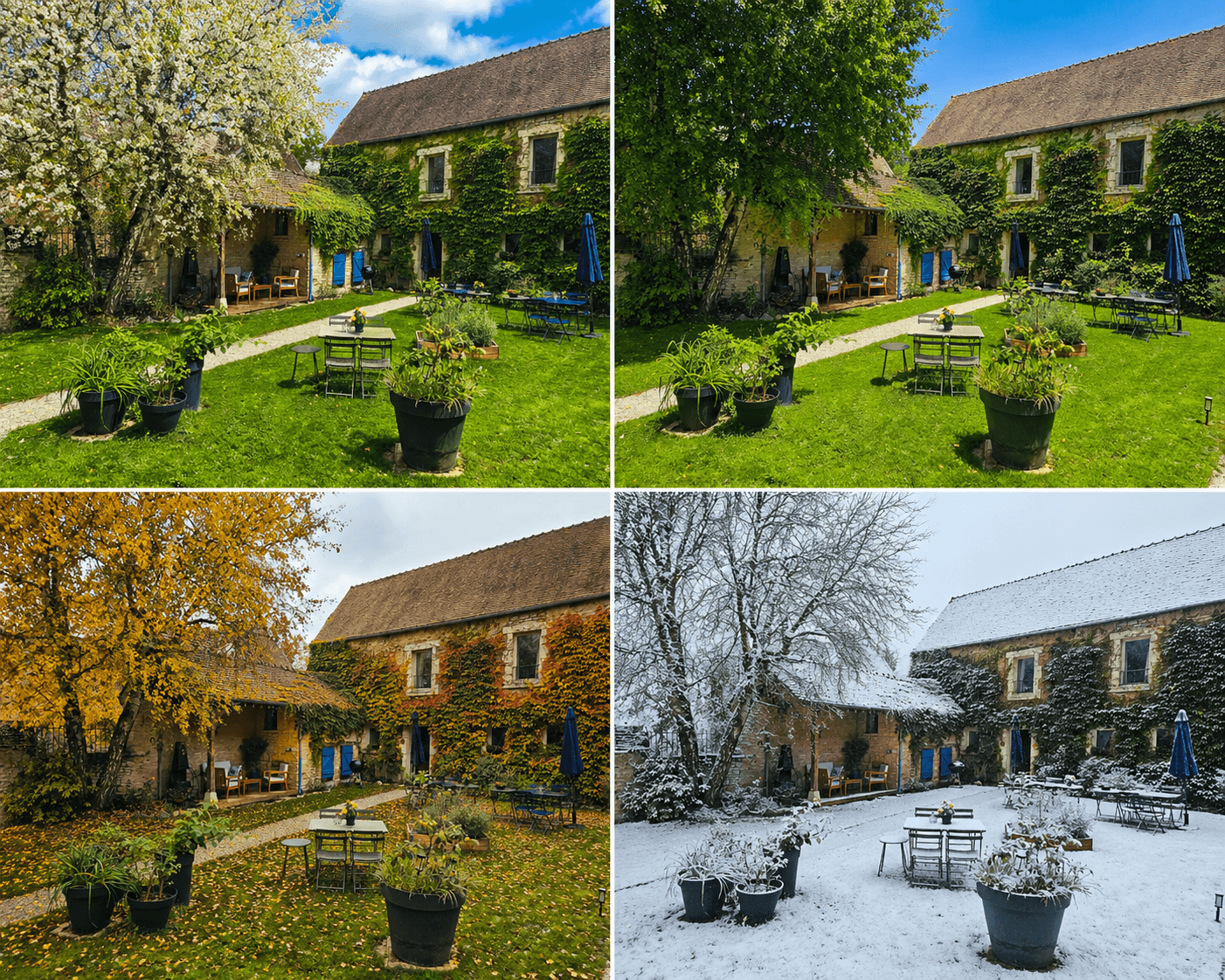
There was something. In the proportions of the walls. In the depth of the silence. In the way the morning light crossed the courtyard. This place wasn’t dead, it was sleeping. And it was waiting for someone to wake it up.
We bought it. Knowing clearly that we were buying not a house, but a building site that would take years. That our savings would go into it. That our nights would too.
The first year was a mixture of demolition and wonder.
We tore up floors to find stone beneath. We opened walls to uncover windows. We spent weeks on our knees, scraping, sanding, trying to understand what each room wanted to become. Henry, our son, was five. He wore a hard hat too big for his head and carried pebbles in a wheelbarrow three times his size. Juliette wasn’t yet born.
We restored the farm room by room. Not with a logic of profitability, with a logic of beauty. Each space had to tell a story, the stag, the wolf, the bear, the falcon. Four animals from the woods that surround us. Four ways of inhabiting a place.
We kept everything that could be kept, the stones, the beams, the old doors, and we added what the house had never had, modern bathrooms, heating that works, insulation that holds the warmth, WiFi.
The idea was simple, and it hasn’t changed, to feel at home, with today’s comfort, in a place that is three centuries old.
We opened our doors in the summer of 2025.
The first guest arrived on a July evening. He parked his car, looked at the courtyard, and said, “It’s beautiful here.” And that was the moment, not before, not during the building work, not while signing the deed, when we knew we had made the right choice.
Since then, people come. Not many, we’re neither a hotel nor a campsite. A few people at a time, in four distinct spaces. Couples. Families. Travellers in transit southward who stop for one night and end up staying two. People who searched “chambre d’hôtes Bourgogne” online and arrived here without knowing what they’d find.
What they find, I think, is a place that exists for good reasons. Not for yield. Not for return on investment. For beauty. For rest. For this slightly mad idea that a place can be both a shelter for humans and a renewal for the land.
People sometimes ask me whether it was worth it, leaving everything, crossing the ocean, starting from zero in a crumbling farm.
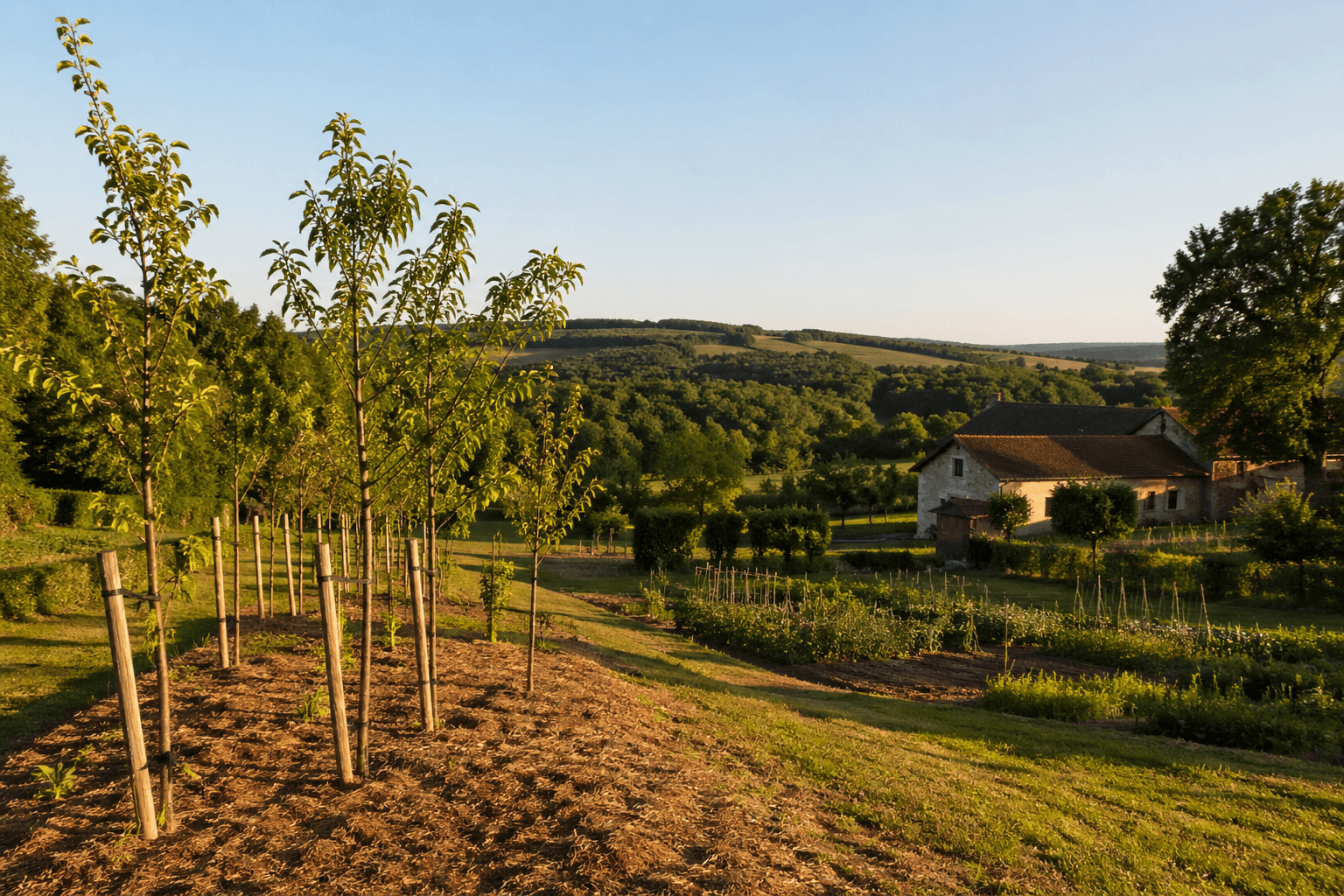
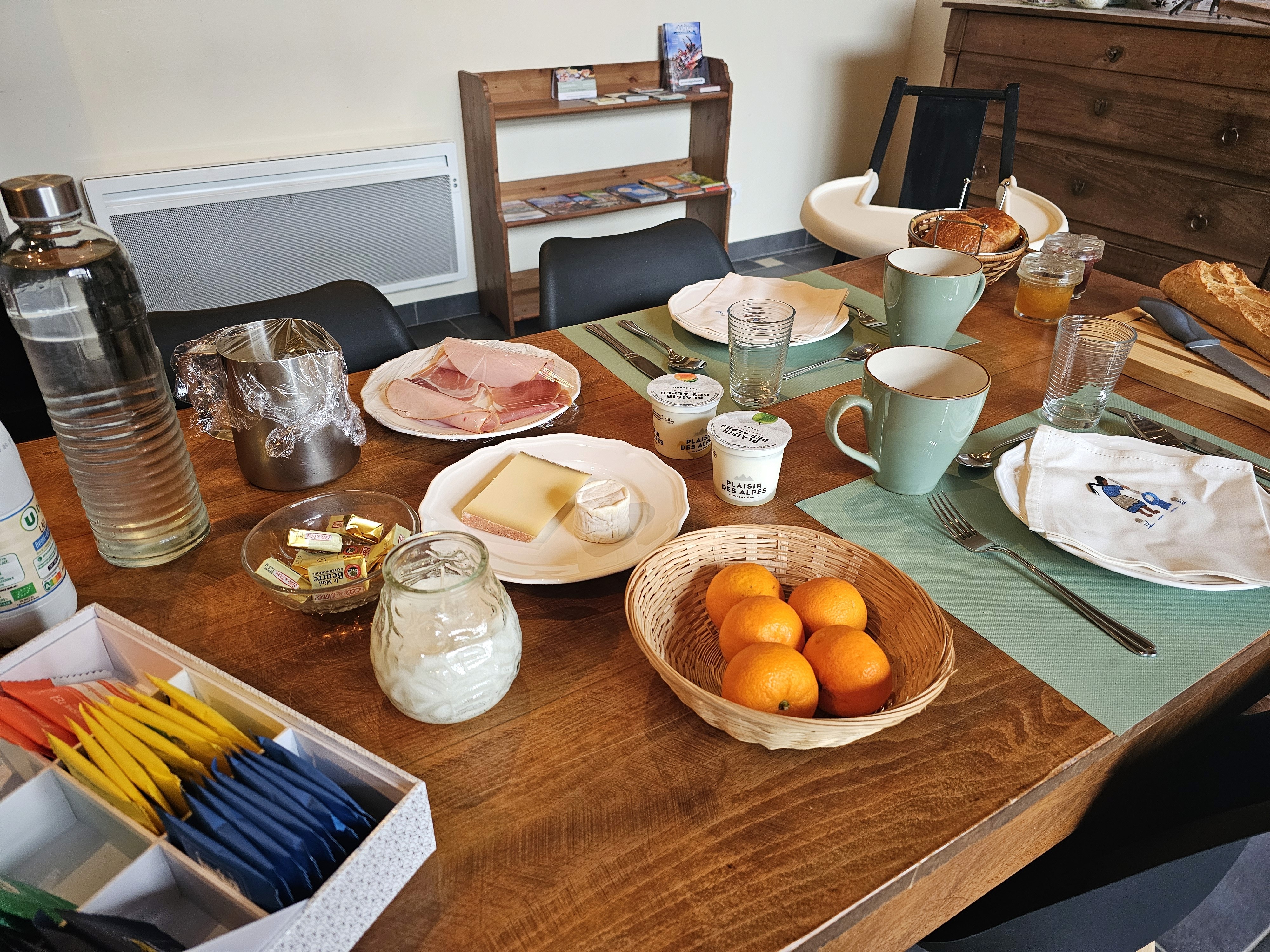
I never answer right away. I look at the garden. I listen to the birds. I watch Henry running with the dog and Juliette picking flowers she calls “my treasures.” I see Rose setting the dining room for tomorrow’s breakfast. I see the walls we raised back up, the courtyard we returned to the light, the trees we planted that are still just sticks with leaves.
And I say, ask me again in twenty years.
But yes. It’s worth it.